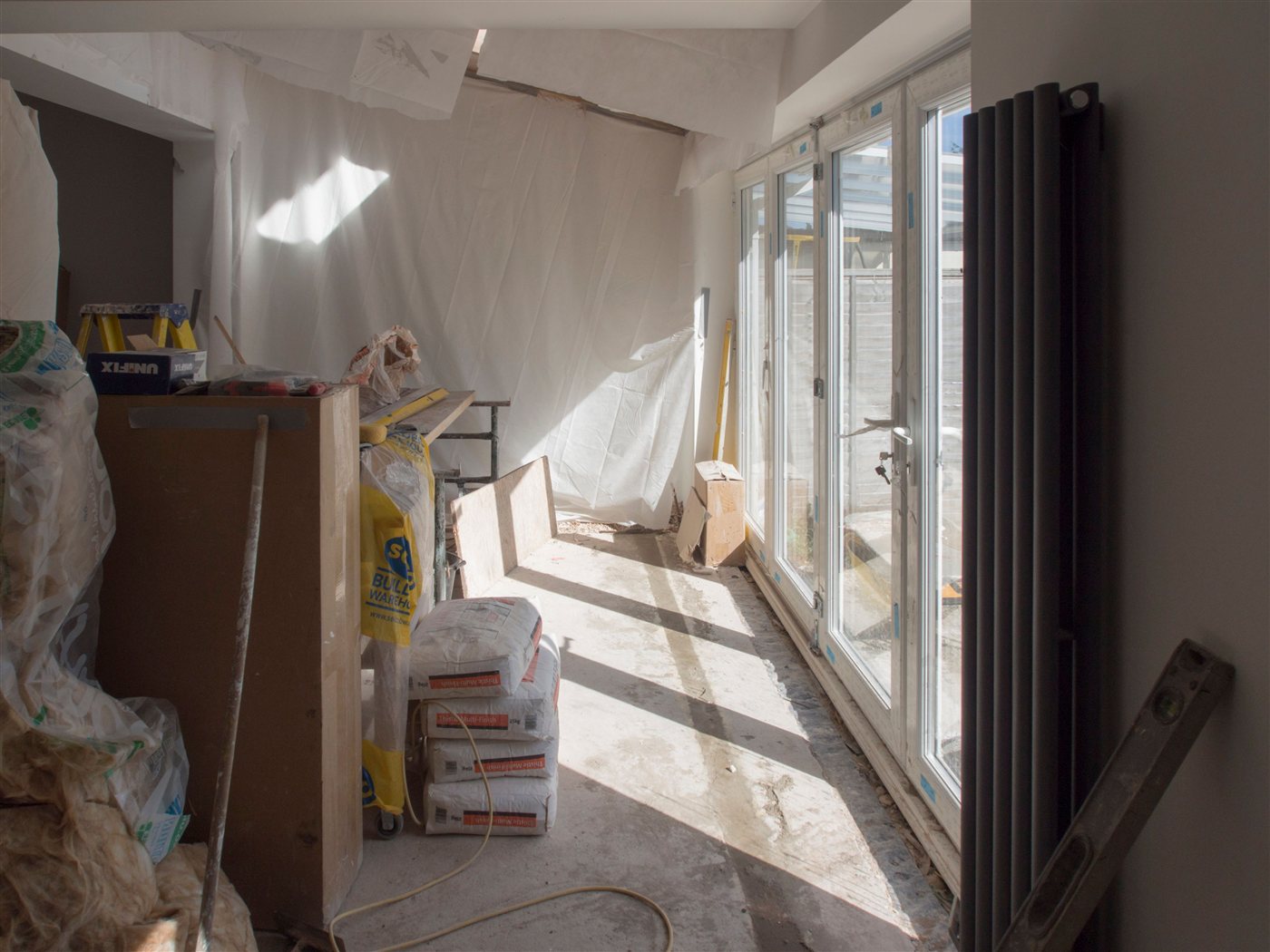
Why lenders withdraw mid-auction process
Lender withdrawal after an auction purchase happens more often than buyers expect — and it happens for reasons that have nothing to do with the borrower's creditworthiness or the viability of the deal:
- Property condition below minimum standard — many bridging lenders and all mortgage lenders apply a minimum habitability threshold. Properties requiring refurbishment, lacking a kitchen or bathroom, or rated below a certain EPC grade are declined even after an initial approval.
- Valuation below the purchase price — if the surveyor's assessed open market value comes back below the purchase price, the lender's LTV calculation is thrown off. Rather than renegotiating, many simply withdraw.
- Internal risk appetite changes — lenders periodically tighten criteria without notice. A deal approved in principle last week may fall outside current policy today.
- Gifted deposit or source-of-funds issues — lenders with rigid compliance frameworks will withdraw rather than work through evidencing unusual fund sources.
- Mixed-use or semi-commercial property — standard residential lenders cannot fund a shop with a flat above, a mixed-use building, or anything with any commercial element. Borrowers who bid under the assumption that residential rates apply often discover the problem only after valuation.
- Title issues identified late — missing building regulations, unusual restrictive covenants, or title complications can trigger a withdrawal if the lender is not set up to deal with them.
Do not spend time trying to get your original lender to reverse the decision. Arrange replacement finance immediately. Every hour you spend on the original lender is an hour not spent arranging replacement finance. AF Credit can issue indicative terms the same day from a five-point summary of your deal.
What to do in the next 24 hours
- Confirm your exact legal deadline. Not the auction house's standard terms — the actual contractual completion date in your purchase contract. Ask your solicitor whether any extension is available and what it costs. Then plan on not needing one.
- Speak to us or your broker straight away. With 10–14 days remaining, time matters. AF Credit makes its own credit decisions in-house and can instruct solicitors the same day you proceed, whether you come to us directly or through your broker.
- Have your five key facts ready. Property address. Purchase price. Loan amount you need. Property type (residential, semi-commercial, etc.). Your completion deadline. That is enough for same-day indicative terms.
- Get your legal pack together. Title register (available from HMLR within minutes), searches if already obtained, special conditions of sale, auction legal pack. Your solicitor will have most of this — email it to your new lender immediately.
- Confirm your exit. Sale, BTL refinance, or commercial mortgage. A credible, specific exit strategy is required by every lender. The clearer yours is, the faster the decision.
Why use a direct lender for an auction rescue
How the rescue timeline works
Four rescue cases — all completed before the deadline
AF Credit has published four auction rescue case studies covering lender withdrawal, mortgage declined, and standard mortgage ineligibility on mixed-use property.
End-of-terrace purchased at auction for £118,000. Original bridging lender withdrew on day 14 of the 28-day window, citing property condition. AF Credit stepped in — no minimum condition standard — and completed in 7 working days.
First-time buy-to-let investor's 10% deposit rescued after original lender withdrew. AVM valuation, all source-of-funds evidenced same day, dual-rep legals. Completed one working day inside the remaining window.
Shop with flat above purchased at auction. Standard mortgage lender declined — mixed-use property outside residential criteria. AF Credit provided semi-commercial bridging and completed within the 28-day window with 6 days to spare.
Experienced contractor with adverse credit — previous lenders had taken upfront fees and failed to complete. AF Credit provided a refurbishment bridging loan using AVM, rolled all fees in, and completed on the borrower's contractual deadline.
What information do you need to send AF Credit?
To issue same-day indicative terms on an auction rescue, we need five things:
| What we need | Why | When |
|---|---|---|
| Property address | To run an AVM check and assess property type | Day 1 — for indicative terms |
| Purchase price and loan amount | To calculate LTV and structure the facility | Day 1 — for indicative terms |
| Exact completion deadline | So we can confirm whether our timeline is achievable | Day 1 — critical |
| Legal pack / title register | For formal credit approval and solicitor instruction | Day 1–2 — as soon as available |
| Exit strategy | Sale, BTL refinance, commercial mortgage — must be credible | Day 1 — for indicative terms |
You do not need all of this before calling. Indicative terms can be issued on the first three items alone. Send the legal pack and title register as soon as you have them — we request the rest in parallel to avoid any delay.
Frequently asked questions
Not if you can replace the finance before the deadline. The 10% deposit is at risk only if you fail to complete within the auction house's contractual completion date — typically 28 days for unconditional auctions. A specialist direct lender can often step in and complete within 7–10 working days, which is enough time if you move immediately. AF Credit has completed auction rescues with under 10 days remaining.
Yes. Lender withdrawal is more common in auction transactions than the industry acknowledges, and specialist direct lenders step in regularly. The key is to act the same day you receive the withdrawal — call a direct lender, have your legal pack available, and confirm your exact deadline. A good lender can issue indicative terms within hours.
Yes. AF Credit does not apply a minimum condition standard on bridging finance. Properties that are uninhabitable, require refurbishment, or have been declined by a lender on condition grounds are regularly accepted. We lend on the assessed open market value in its current state — the condition affects the LTV we can lend to, not our willingness to lend. In the Wolverhampton case, we completed at 75% LTV on a property the original lender declined on condition grounds.
Yes. Gifted deposits are accepted by AF Credit where properly evidenced — a signed gifted deposit letter from the donor confirming the funds are a gift and not a loan. This is a standard requirement and can be obtained and cleared by solicitors within hours. It is one of the most common reasons specialist lenders are asked to step in on auction rescues.
Yes. AF Credit lends on semi-commercial property (retail, office or commercial unit with residential above) where a standard mortgage lender has declined. Our Coventry case study is a shop with a flat above, completed in 22 days within a 28-day auction window. Semi-commercial bridging is available up to 70% LTV.
In most cases, yes — a new lender will instruct their own valuation. However, AF Credit can use AVM or desktop valuation on eligible standard residential properties, which takes hours rather than the 7–14 days a physical survey requires. On a rescue with days remaining, AVM is often the only feasible route — and it is fast enough to make the deadline.
No. AF Credit does not apply a premium rate for urgency. The rate is driven by LTV, property type, loan size and borrower profile — not by how quickly you need the money. The cost of bridging finance will almost always be far less than the cost of losing your 10% deposit plus any vendor claim for losses on re-sale.
Your completion deadline, your loan amount, your property address, and your legal pack — that is all we need. Call our team on 01451 514 563 or submit a quote below and we'll come back to you the same day. Every hour matters on an auction rescue.