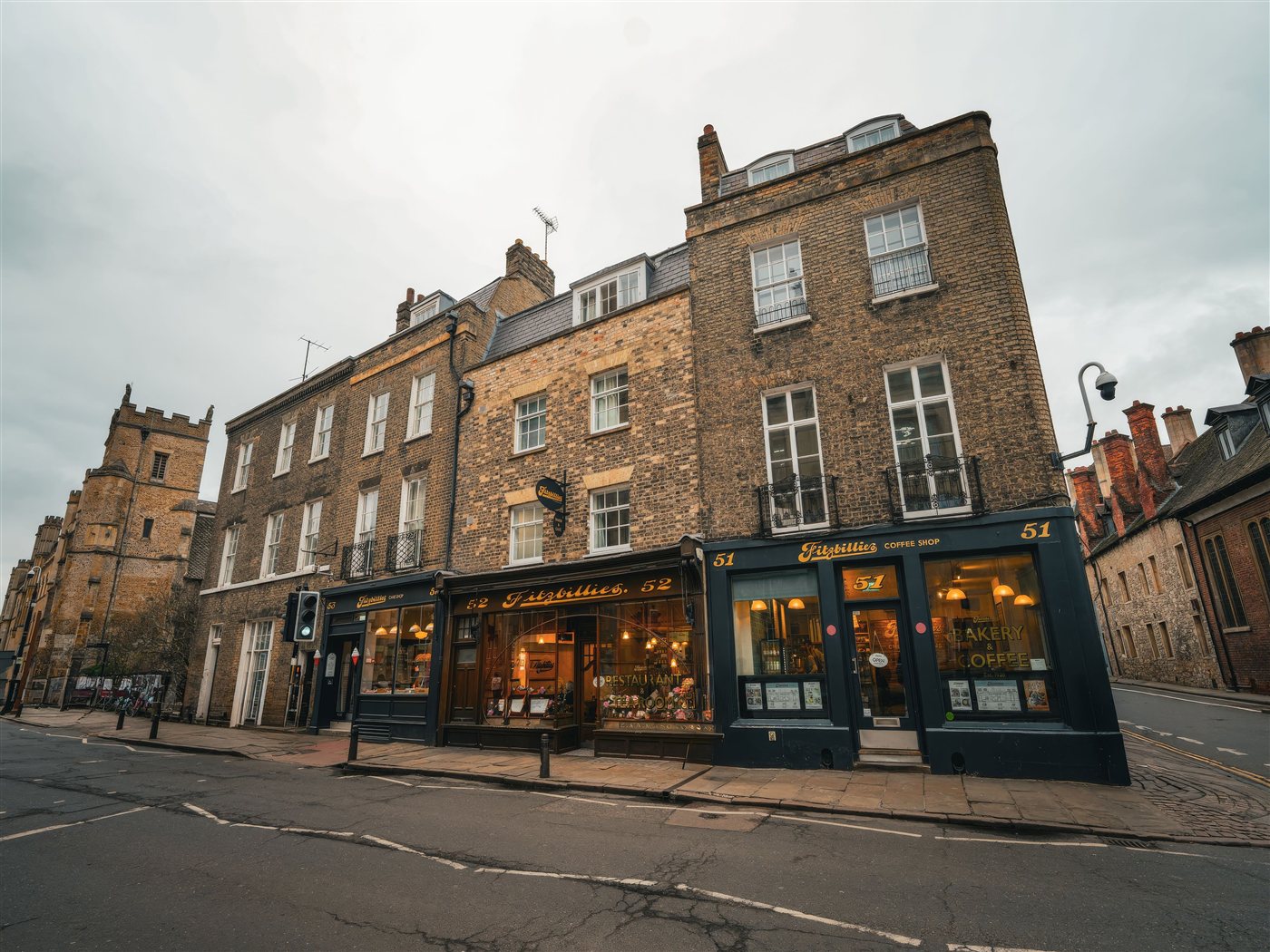
Why standard mortgages don't work for mixed-use property
A residential mortgage lender requires its security to be a purely residential property — a house, flat, or residential HMO. The moment a property has a commercial element — a retail unit, an office, a workshop — it falls outside residential mortgage criteria. The lender's valuation panel cannot assess it correctly, and their lending criteria cannot accommodate it.
This is not a credit or borrower issue. It is a product issue. A shop with a flat above is a perfectly viable investment — it has residential rental income, commercial rental income, and a blended open market value that often offers good yield relative to a purely residential equivalent. The problem is finding the right finance product, not finding a better lender of the same type.
- Shop or retail unit with flat above — the single most common scenario
- Office building with residential flat or studio
- Former public house with living accommodation
- Mixed-use terrace with ground-floor commercial and upper residential
- Light industrial or workshop unit with attached residential
- Guest house or B&B with owner's living quarters
- Medical or professional practice with residential above
If two different uses appear on one title, assume residential mortgage lending is unlikely to work. Bridging finance or a semi-commercial/commercial mortgage is the route.
Case study — Coventry: shop with flat above, mortgage declined, completed in 22 days
A property investor purchased a Coventry mixed-use property at auction — ground-floor retail unit, two-bedroom flat above — for £450,000. Their standard mortgage lender declined at survey: the commercial element placed the property outside residential lending criteria.
AF Credit was contacted with 22 days remaining on the 28-day auction window.
- Specialist RICS surveyor instructed immediately — experienced in semi-commercial blended valuations
- Semi-commercial bridging loan structured at 57.8% LTV against the open market value
- Legal process running in parallel with the valuation
- Completed in 22 days — 6 days inside the 28-day deadline
The full case study is at Semi-Commercial Bridging Loan — Coventry.
What AF Credit lends on
AF Credit provides semi-commercial bridging loans up to 70% LTV on mixed-use property in England and Wales. The key criteria:
| Factor | AF Credit position |
|---|---|
| Maximum LTV | Up to 70% on semi-commercial |
| Minimum loan | £26,000 |
| Maximum loan | £2,000,000 |
| Location | England and Wales |
| Borrower type | Individual, limited company, SPV |
| Occupation | Unregulated only — property must not be or become borrower's main residence |
| Commercial vacancy | Accepted — not reliant on tenant income |
| Valuation | Specialist RICS blended valuation required |
Exit strategies for semi-commercial bridging loans
The three most common exits for semi-commercial bridging loans:
- Refinance onto a semi-commercial mortgage — once the property is stabilised (tenanted, any works complete), a semi-commercial mortgage from a specialist lender replaces the bridge. This is the most common exit for buy-and-hold investors.
- Sale — the property is sold at its open market value. Semi-commercial properties attract investor buyers who can access commercial finance, so the market is thinner but not absent.
- Conversion to residential under PD — where the commercial floor space qualifies for change of use under permitted development (Class MA), the commercial element can be converted to residential, creating a purely residential asset that can be refinanced onto a standard residential mortgage at a typically higher LTV.
Frequently asked questions
Standard residential mortgage lenders require purely residential security. Any commercial element — a retail unit, office, or other commercial floor space — takes the property outside residential lending criteria. This is a product limitation, not a reflection on the borrower or the property's investment quality.
Up to 70% LTV on semi-commercial property. The Coventry auction case completed at 57.8% LTV — below the maximum, reflecting the specific property and transaction. Each case is individually assessed.
Yes. AF Credit has completed semi-commercial auction purchases within 28-day completion windows. The specialist RICS valuation is the main timeline driver — typically 3–5 working days for semi-commercial. With the right solicitors, completion within 22 days is achievable as demonstrated in Coventry.
AF Credit provides unregulated bridging finance only and does not lend on properties the borrower will occupy as their main residence. If you intend to live in the flat as your primary home, the loan would be regulated — you will need an FCA-authorised lender. If the flat is for rental or secondary use, AF Credit can consider the application.
Yes. Where the works plan includes conversion of the commercial floor space to residential (under Class MA permitted development or a full planning application), AF Credit can structure the bridging loan to support the project. The exit in this scenario is typically refinance onto a standard residential mortgage once the conversion is complete.
Tell us the property address, the purchase price or current value, and your proposed loan. We'll issue indicative terms the same day and confirm whether the property qualifies for semi-commercial bridging. 01451 514 563 or get a quote below.